
Comparison of Laparoscopic and Open Surgery: Benefits and Recovery
When surgery is advised, many patients enquire, "Will I need open surgery, or can it be done through small incisions?"
Advances in surgical methods have made laparoscopic or keyhole surgery a possibility for many illnesses formerly treated with open surgery.
Both laparoscopic and open surgery can treat medical conditions. How the surgeon reaches the treated region is key.
What distinguishes laparoscopic from open surgery? Does laparoscopic surgery always speed recovery? What are its benefits? Let's investigate.
What Is Laparoscopic Surgery?
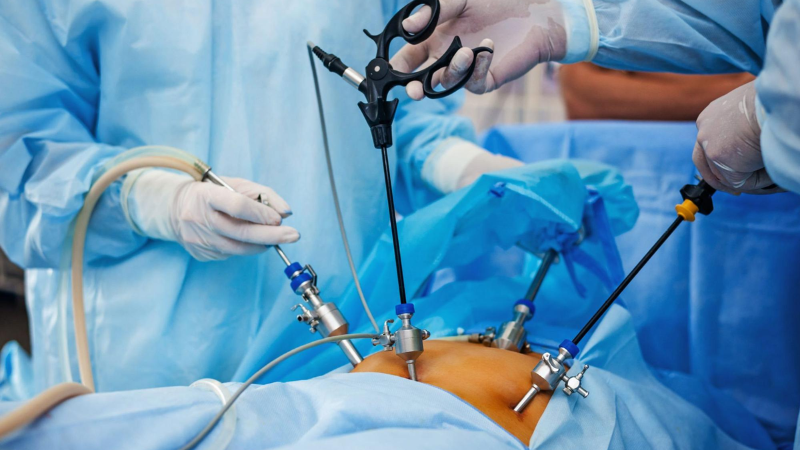
Keyhole or minimally invasive laparoscopic surgery uses small incisions instead of one major cut.
A narrow laparoscope has a camera and light. The surgeon uses a small abdominal incision to insert it and monitor the internal organs.
Specialised surgical equipment can reach the treatment area through small incisions.
Laparoscopy is being used for many treatments, including gynaecological surgery. Endometriosis, ovarian cysts, fibroids, ectopic pregnancy, and various hysterectomy procedures can be treated with it.
What Is Open Surgery?
Open surgery uses a bigger incision to give the surgeon direct access to the treatment region.
The incision for abdominal or pelvic surgery may be across or along the abdomen depending on the treatment.
Open surgery remains vital after decades. While minimally invasive surgery is beneficial for many individuals, open surgery may be safer or better in some cases.
The "newer" method is not the only consideration. Your surgeon will evaluate the condition, its severity, location, medical history, and operation difficulty.
What's the Difference Between Laparoscopic and Open Surgery?
The main variation is surgical access size and type.
Laparoscopic surgery uses a camera, small incisions, and specialised instruments. Open surgery uses a bigger incision for direct access.
Differences can affect pain, scars, hospital stay, and healing. The operation and the patient's condition determine the benefits.
Laparoscopic Surgery
- Small cuts
- Surgical camera
- Usually less tissue disruption
- Smaller scars
- Less post-operative pain
- Usually shorter hospital stays
- Speedier recovery for appropriate procedures
Open Surgery
- Bigger surgical incision
- Direct surgical access
- May suit complex or lengthy operations
- Improves access when a large area has to be treated
Laparoscopic surgery has benefits, although recovery may still take longer depending on the operation.
Benefits of Laparoscopic Surgery
Laparoscopic surgery's ability to achieve surgical goals with minimal incisions is a major benefit. When clinically acceptable, it may offer the following advantages.
Smaller Scars
Laparoscopic surgery employs small incisions, so scars are smaller than in open surgery. Numerous patients value this cosmetic benefit.
Reduced Post-Surgery Pain
The process may be less painful with smaller surgical wounds than with open procedures. NHS hospital patient material often lists laparoscopic surgery's reduced postoperative pain.
Shorter Hospital Stay
Laparoscopic surgeries often result in shorter hospital stays than open procedures.
Some patients can go home the same or the next day, depending on the operation. Hospital stay duration varies based on surgery kind and intensity.
Faster Return to Normal Activities
Laparoscopic surgery allows patients to return to daily activities faster than open surgery for many procedures.
The recuperation period depends on the surgery, patient health, and complications.
Minimised Surgical Scarring
Laparoscopic surgery scars are less obvious due to smaller incisions.
Is Laparoscopic Surgery Always Better Than Open Surgery?
Not necessarily. Although laparoscopic surgery has many benefits, it is not suitable for all patients or operations.
Certain procedures are too complicated for minimally invasive methods. Size or location of a tumour, significant scar tissue, certain malignancies, past abdominal operations, or other medical considerations may affect the surgical technique.
If complications arise or the physician decides an open technique is safer, a laparoscopic procedure may need to be switched to open surgery.
Safe and effective therapy should always come first, not the smallest incision.
Laparoscopic Surgery in Gynaecology
Modern gynaecology includes laparoscopic surgery. Depending on the patient, laparoscopic surgery may be used to treat:
- Endometriosis
- Ovarian cysts
- Fibroids
- Ectopic pregnancy
- Adhesions in the pelvis
- Fallopian tube issues
- Hysterectomy
- Some fertility methods
Diagnostic laparoscopy allows a gynaecologist to directly examine the pelvic organs for pelvic pain or fertility issues when other tests have failed.
What Is Laparoscopic Surgery Recovery Like?
Recovery differs by person.
Laparoscopic surgery may cause abdominal pain, bloating, fatigue, and shoulder-tip pain. Because many laparoscopic operations employ carbon dioxide gas to generate abdominal space, these symptoms can arise.
Patients are advised to move around when safe. Medical staff will advise on wound care, medication, exercise, and returning to work.
The technique greatly affects recuperation time. Complex laparoscopic procedures may take longer to recuperate from than diagnostic laparoscopies.
How Does Recovery Go After Open Surgery?
Open surgery requires a wider incision and may take longer to recover from.
Depending on the operation, patients may need to stay in hospital longer and may have more wound pain.
Lifting, exercising, driving, and returning to work are gradually increased with surgical team guidance.
Again, recovery is personal. Open surgery can take longer to recuperate from than laparoscopic surgery.
Can a Laparoscopic Hysterectomy Be Done?
Yes. Hysterectomy can be done laparoscopically in some cases.
The surgeon's assessment, patient condition, uterine size and shape, previous surgery, and other medical variables determine the best course of action.
The American College of Obstetricians and Gynaecologists found that laparoscopic hysterectomy for benign gynaecological conditions has faster recovery, shorter hospital stays, and fewer wound or abdominal-wall infections.
The optimum surgical method depends on the person.
Which Surgery Is Right for You?
There is no clear winner between laparoscopic and open surgery. The proper method depends on:
- The ailment being treated
- Problem size and location
- Surgery complexity
- Your health history
- Previous abdominal or pelvic operations
- Your general health
- Surgeon expertise
- Technical suitability of minimally invasive surgery
Before surgery, your surgeon should describe the process, alternatives, benefits, and dangers.
Questions for Your Surgeon
If you are advised to have surgery, ask:
- Can my procedure be done laparoscopically?
- Why do you advocate this surgical approach?
- What are the pros and cons of laparoscopic versus open surgery for me?
- How long might I be hospitalised?
- How long will recovery take?
- When can I resume work and routine activities?
- Could the treatment be converted from laparoscopic to open?
These conversations might help you prepare for and choose treatment.
The Goal: Safe Surgery and Smooth Recovery
Laparoscopic surgery has revolutionised numerous surgical procedures. When clinically acceptable, smaller incisions, lower surgical pain, shorter hospital stays, and speedier recovery might make it appealing.
Open surgery remains crucial, especially for difficult procedures or when minimally invasive surgery is not suitable.
So "Which surgery is better?" is not the most crucial question. It is: "Which surgical approach is safest and most appropriate for me?"
A knowledgeable surgeon can evaluate your problem, explain your options, and prescribe a treatment plan.
Ask questions about surgical recommendations. Understanding the procedure, projected recuperation, and alternatives can boost your confidence and clarity during therapy.
Not sure whether laparoscopic or open surgery is right for you? Book a consultation with our surgical team at G.R. Hospital, Kosi Kalan for personalised guidance.