
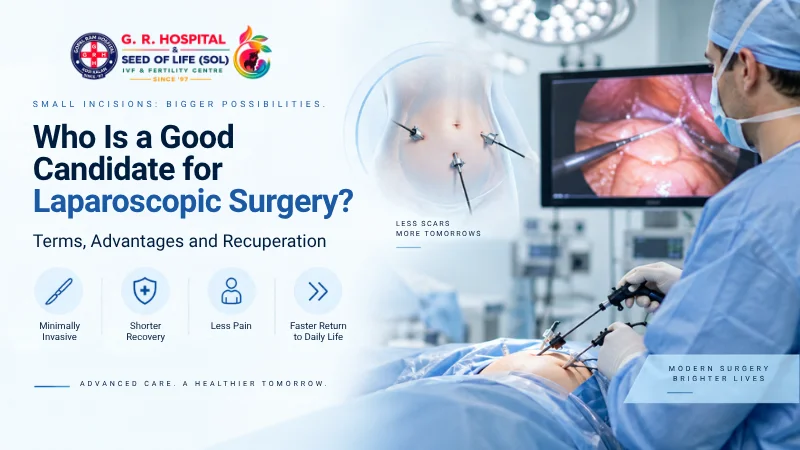
Who Is a Good Candidate for Laparoscopic Surgery? Terms, Advantages and Recuperation
Surgery, of course, brings up questions and anxieties. Patients generally want to know if there is a safer or less intrusive alternative, how much pain they may be in, how long they will need to stay in hospital, and when they can go back to their daily routine.
Laparoscopic surgery (keyhole surgery, or minimally invasive surgery) has become an important option in the treatment of numerous diseases. Surgeons will make numerous small incisions instead of one large incision to insert a laparoscope and specialized surgical equipment.
Patients searching for Laparoscopic Surgery Mathura , Laparoscopic Surgery Kosi or Laparoscopic Surgery Brij Dham can access this keyhole approach at GR Hospital in Kosi Kalan.
However, laparoscopic surgery is not always the correct option for everyone. Your candidacy will be determined by your medical condition, overall health, previous surgeries, the intricacy of the treatment and the surgeon's evaluation.
So, what does it take to be a suitable candidate for lap surgery? We’ll understand the conditions, the potential benefits, suitability and recuperation process.
What Does Laparoscopic Surgery Mean?
Laparoscopic surgery is a type of minimally invasive surgery that is used to diagnose and cure illnesses that affect organs inside the abdomen or pelvis.
To perform the surgery, a surgeon makes small incisions in the body through which a thin instrument called a laparoscope is placed. The laparoscope has a light and a camera which enables the surgeon to observe the interior organs on a display.
Additional minor incisions may be made to allow the insertion of surgical instruments needed to execute the treatment.
Laparoscopic surgery is a common procedure in all branches of medicine, and especially important in gynecological surgery. Depending on the disease it can be used to treat endometriosis, ovarian cysts, fibroids, ectopic pregnancy, pelvic adhesions and some types of hysterectomy.
For women looking for Gynecological Surgery Mathura , our gynecology team at GR Hospital assesses every case first, and the same care is available to patients seeking Gynecological Surgery Kosi or Gynecological Surgery Brij Dham.
Laparoscopic Surgery: Who Is a Good Candidate?
There is no one checklist to evaluate whether someone is a candidate for laparoscopic surgery. The decision is taken based on the state and general health of the individual.
A suitable candidate may be someone for whom:
- Laparoscopic technique is a safe method for treating the disease.
- The problem is located and sized appropriately for minimally invasive surgery.
- You are suitable for anesthetic and operation.
- You do not have medical problems that greatly enhance the risks of surgery.
- Previous abdominal or pelvic surgery is not a contraindication to laparoscopic access.
- Your surgeon is experienced with the technique.
- A minimally invasive method is expected to offer a safe and successful treatment.
“The key question isn’t just about smaller incisions, but rather being able to do the procedure safely and effectively.”
Laparoscopic Surgery: Conditions That Can Be Treated
Laparoscopic surgery can be performed for a number of diseases. In gynecology common indications include:
Endometriosis
Endometriosis is a condition where tissue comparable to the lining inside the uterus grows outside the uterus. In some patients, laparoscopic surgery can be performed to diagnose and cure endometriosis lesions and associated pelvic issues.
Cystic Lesions of the Ovary
Some ovarian cysts may need to be treated surgically, particularly if they are large, persistent, symptomatic, or have other worrisome characteristics. In specific circumstances laparoscopic surgery can also be used.
Fibroids of the Uterus
Fibroids are non-cancerous tumors that grow in or around the uterus. Some fibroids can be treated laparoscopically, depending on the size, number and location.
Ectopic Pregnancy
An ectopic pregnancy is a pregnancy that is located outside of the uterus, most often in a fallopian tube. Where appropriate, laparoscopic surgery can be utilized to treat an ectopic pregnancy.
Adhesions of the Pelvis
Adhesions are bands of scar tissue that can develop in the abdomen or pelvis. At times, laparoscopic surgery can locate and treat adhesions that are symptomatic or impact reproductive health.
Types of Hysterectomy
In selected cases, laparoscopic hysterectomy can be done. Whether this is the right strategy depends on the reason for the surgery, the size of the uterus, previous procedures and the patient’s general health.
Our Laparoscopic Gynae Mathura team reviews fibroids, cysts, endometriosis and hysterectomy cases to see whether keyhole surgery suits you, and patients looking for Laparoscopic Gynae Kosi or Laparoscopic Gynae Brij Dham receive the same assessment at our Kosi Kalan hospital.
Advantages of Laparoscopic Surgery
One of the biggest advantages of laparoscopic surgery is that it avoids the massive incision required for many traditional open procedures.
Potential benefits could be:
1. Minimal Scarring
Laparoscopic surgeries usually require numerous small incisions, instead of one major abdominal incision. This can mean less disruption to the tissue around it.
2. Less Post-Surgical Pain
Some laparoscopic procedures may result in less pain for patients than the equivalent open operation. Discomfort is variable based on the technique and individual subject.
3. Reduced Length of Stay
Some laparoscopic surgeries may allow patients to go home the same day or after a shorter hospital stay. However, more complex operations may need prolonged observation.
4. Back to Normal Faster
Because the surgical wounds are typically smaller, many patients can return to their daily activities sooner than they might after similar open surgery. Recovery time still varies a lot depending on the surgery.
5. Less Scars
The scars might be less obvious when they have healed because of the tiny incisions utilized in laparoscopic surgery.
6. Improved Visualization
The laparoscope offers a magnified image of inside structures on a display. This can assist surgeons to inspect the abdomen and pelvis in depth throughout the treatment through minor incisions.
Who Should Not Be a Candidate?
Laparoscopic surgery is appropriate for many people but not for all patients or all situations.
Your surgeon may suggest another technique if:
- The disease is too widespread or intricate for safe laparoscopic management.
- The problem is too large or in the wrong place for minimally invasive surgery.
- There are substantial adhesions from prior abdominal or pelvic surgery.
- The dangers of laparoscopic surgery or anesthesia are increased by your general health.
- An open technique is thought to be safer or more effective for your particular situation.
Sometimes a surgeon can begin a laparoscopic surgery and then realize during the operation that it has to be converted to open surgery. This is not necessarily a complication but a safety choice based on what is found at the time of operation.
What Is Recovery Like After Laparoscopic Surgery?
The success of the recovery relies on the type and complexity of the surgery.
Some patients may temporarily experience:
- Exhaustion
- Abdominal pain
- Gas or bloating
- Tenderness around the incisions
- Shoulder tip pain caused by gas used during surgery
Symptoms often improve as you get well.
Your surgeon will give you precise advice on wound care, medication, physical activity, driving, and returning to work.
A simple diagnostic laparoscopy may have a short recovery period whereas more sophisticated surgeries may take several weeks before you feel entirely back to normal.
It’s crucial not to compare your recovery to someone else’s. Recovery experiences for two patients after laparoscopic surgery can vary significantly based on the treatment and their unique health.
Can Laparoscopic Surgery Affect Fertility?
Women undergoing gynecological surgery have to consider the issue of fertility.
How it affects your ability to have children depends on the ailment you have and the type of operation you have. Some laparoscopic treatment can help with diseases that are linked to fertility problems, while other procedures can have an effect on a future pregnancy.
Where surgery alone is not enough, couples can discuss assisted options at our IVF Centre in Kosi Kalan, which many families regard as the Best IVF Centre in Kosi and the Best IVF Centre in Brij.
If you are planning to have children, discuss your fertility objectives with your gynecologist before the procedure. Your surgeon can discuss with you the possible effects of the surgery you are considering on your reproductive health, and whether there are alternative treatment choices.
GR Hospital is also known as the Best IVF Centre in Mathura , so patients looking for an IVF Centre in Mathura, an IVF Centre Mathura residents can reach easily, or an IVF Centre Brij Dham can plan fertility care alongside their gynecology treatment.
Questions to Ask Your Surgeon
If you have been advised to have laparoscopic surgery, consider asking:
- Will I be a suitable candidate for laparoscopic surgery?
- Why do doctors recommend laparoscopic surgery?
- What are the possible advantages and disadvantages?
- Will my operation need to be changed to open surgery?
- How long does the operation take?
- How long will I have to be in hospital?
- What is the estimated recuperation time?
- When can I go back to work and routine activities?
- Will the treatment damage my ability to have children?
- What are the other therapies?
These conversations can help you understand your treatment and make a better educated choice.
The “Right” Way Is the Patient’s Way
Laparoscopic surgery has various potential advantages, including smaller incisions, less postoperative pain, shorter hospital stays, and a potentially quicker recovery.
But being a suitable candidate for laparoscopic surgery is much more than just wanting minimal scars. Your diagnosis, overall health, previous surgery, plans for fertility and the complexity of the procedure all have to be taken into account.
Ask if you are a candidate for a laparoscopic procedure if your doctor recommends surgery. A trained and experienced surgeon can discuss the options, potential benefits, risks and help you decide on the best route for safe and effective treatment.
Frequently Asked Questions
Who is a good candidate for laparoscopic surgery?
A good candidate is someone whose condition can be treated safely through small incisions, who is fit for anesthesia, and who does not have health problems that make keyhole surgery riskier. Your surgeon makes the final decision after examining you and reviewing your reports.
Which gynecological conditions can be treated with laparoscopy?
Laparoscopy is commonly used for endometriosis, ovarian cysts, uterine fibroids, ectopic pregnancy, pelvic adhesions and some types of hysterectomy. Whether it suits your case depends on the size, location and complexity of the problem.
Can I have laparoscopic surgery if I have had abdominal surgery before?
Often, yes. A previous abdominal or pelvic surgery does not automatically rule out laparoscopy. However, heavy scar tissue from earlier operations may lead your surgeon to recommend an open approach for safety.
How long does recovery take after laparoscopic surgery?
Recovery depends on the procedure. A simple diagnostic laparoscopy may need only a few days, while more complex surgery can take several weeks. Temporary tiredness, bloating and shoulder tip pain are common and usually settle as you heal.
Will laparoscopic surgery affect my chances of pregnancy?
It depends on your condition and the procedure. Some laparoscopic treatments can improve fertility by treating problems such as endometriosis or adhesions. If you plan to have children, discuss this with your gynecologist before surgery.
Can laparoscopic surgery be converted to open surgery?
Yes. Sometimes the surgeon finds during the operation that an open technique is safer. This is a safety decision based on what is seen at the time, not necessarily a complication.